Showing posts with label Behind the picture. Show all posts

Thursday, April 28, 2011

Supernatural creatures of the mountains - les créatures surnaturelles des montagnes


They are named Jinn and they often come out at night. They like remote mountain valleys too. My first "encounter" with them was in Kachura village, in Pakistan's Karakoram mountains, during a full moon night.

Here is a two-part edited short story about Jinn's (and epilepsy...) in Afghanistan's Wakhan region by my friend and Afghan Kyrgyz expert © Ted Callahan:

"One night, as I’m writing up the day’s fieldnotes, Orunbai, a son of the Khan, comes to my tent.

“Sorry to bother you, Temir-aka, but my wife is sick. It might be a jinn, but we’re not sure.”

I’ve been wondering about traditional healing practices among the Afghan Kyrgyz, since I have yet to see any evidence of it, and eagerly follow Orunbai to his house. Inside, I find Kyrgol, his wife, keeled over, complaining of severe abdominal pain and moaning as she grasps her stomach.

...They decide that... they will try to drive the jinn out themselves. First, one of the women brings over a loaf of round, flat bread with two candles lit in the middle of it. This is passed in front of the sick woman three times, while chants are muttered. Then, this same woman brings over some embers from the fire and, putting them in front of Kyrgol, fans the smoke towards her. Finally, one of the men takes a rock which has been sitting atop the stove, wrapped it in a red cloth, and moves it back in forth in front of Kyrgol’s stomach, though without actually touching her.

Curious, I feign ignorance and ask why they are doing this. I am simply told, “For the jinn.”

When my turn comes, I give her some painkillers and antacids. The next day, Kyrgol is fine. Opinion is split over whether it really was a jinn or just, as I suggest, indigestion. We agree to let the question of what the problem might have been rest."
______


"One Wakhi shepherd at the Khan’s camp, Mirza, suffers from epilepsy, a common condition in the Wakhan owing to close intermarriage. Often, around dinnertime, he would rise, walk over to a corner, lie down, and suffer an epileptic seizure. I assumed that everyone knew he had epilepsy and that he simply endured his condition because no medicine was available.

One day, I asked Mirza whether he had sought treatment for his condition.

“Yes, I have visited several bakshy ( - ed: in Kyrgyz community, Bakshy are male shaman with healing powers) in the Wakhan but they have not been able to help me.” he answered.

Surprised, I asked, “Wait, what do you think your problem is?”

“I have a jinn” he replied, as if it were obvious. "

Text ©Ted Callahan

Sunday, April 17, 2011

Greg Mortenson on 60 Minutes - CBS news


I have been following Greg's Mortenson work with the Central Asia Institute (CAI) since my year-long stay in Skardu, Pakistan,  back in 1999. I started getting e-mails from various people over the last few days, requesting images from CAI schools in Afghanistan. I didn't know why until a friend sent me that link (aired tonight). Over the years, I have heard few negative stories from various people about Mr Mortenson - it's always hard to know if they are simply jealous of his success or plainly telling the truth. I hope Greg gets on CBS's 60 minutes (or any TV interview program for that matter), to clear the air...

In 2002, Outside got in touch with me to shoot a story on the Siachen glacier, in the disputed Kashmir region - I was put in touch with Greg to get access - the initial story proposal was to cross the Siachen glacier from Pakistan to India, walking over 7000m, with missiles being fired over your head. There was talk about me coming to the US  to "train" for glacier crossing etc. I thought it was crazy and declined - a tough choice for a photographer who was just starting up.
I must have been right since the story's angle was later considerably changed: photographer and writer first had a look at Siachen's glacier and its army presence on the Pakistan side, then they went down to Islamabad to legally cross into India, make there way up to the Indian army camps opposite Siachen and complete their story. This seemed much more reasonable. Teru Kuwayama, a photographer friend met in New York in the late 90's, shot the story (great B+W work) with writer Kevin Fedarko. I was later sent to Tuvalu to shoot an interesting story on global warming for Outside, my "compensation" price. I was far from my beloved Karakoram, but that story certainly opened my horizon...

Greg's right hand man is also an old Wakhi friend of mine, Sarfraz - the older brother of my Wakhi "teacher", Alam Jan Daryo. Sarfraz is from Zood Khun, a tiny village at the end of the Chapursan valley, on the border with Afghanistan and a stone throw away (to be exact 4 days walk over a 5000m pass) from the Afghan Pamir, the home of the Afghan Kyrgyz - a story that has "obsessed" me for 10 years now. Anyway, CAI's growing involvement in Afghanistan's Wakhan Corridor, building schools, with the help of Sarfraz, has been of great interest to me.
The CAI recently built a school in the Afghan Pamir, at a place called Bozai Gumbaz - a 4 or 5 days walk from the nearest village of Sarhad. It's hard to imagine the remoteness of the Little Pamir - and it's cultural complexity - but all these factors made it hard for me to imagine a foundation would consider building a school there - in fact, the Aga Khan Foundation didn't consider doing it, and they are the most involved in the region.

I went back to the Afghan Pamir in January-February 2011 for my second winter expedition (first was in Jan/Feb 2008, where I collaborated with anthropologist and now friend Ted Callahan, who appears in 60 minutes). During the expedition, via our only satellite phone (who worked erratically as we were close to the China/Tajikistan border), we were asked to shoot images (video + stills) of the CAI school, by an American producer, working for CBS. Strange request to get in such a lonesome place.
The school looked like it was never-ever used. The 2 only Kyrgyz teachers in the Afghan Pamir leave too far off from the school . In fact, by the time the CAI finished building the school, the government had already started sending teachers up to the Afghan Pamir and classes were being held at 8 locations. They didn't have schools, they just used the Aga Khan Foundation tourist yurts or regular guestrooms or tents. But it worked. For these reasons, the school, so far, has never been used - at least not to the degree CAI claims...

Here is the CAI school in Bozai Gumbaz (February 2011), with UrunBai, one of the Kyrgyz leader standing proud in front.
I also attached a picture from a Aga Khan Foundation's school in Zood Khun, North Pakistan - not a CAI school. When the weather is good, students often go outside of the classroom...
And finally, a telling note "Instructions for Life", posted on the wall in that AKF school. Don't forget we are in North Pakistan, immersed in Ismaili communities, a very tolerant form of Islam whose spiritual leader is the Aga Khan.

All images © Matthieu Paley


Wednesday, March 2, 2011

Please clean up that snow if you want to get on that plane - Si vous voulez monter dans cet avion, Merci de bien nettoyer la neige sur la piste d'atterissage...

I am back since 10 days from an incredible 1 month winter expedition in the afghan Pamirs! It's, of course, a long story - and over the next months I will talk about it via my images (haven't even had time to go through them yet). But, following numerous requests, here is a quick sum up...

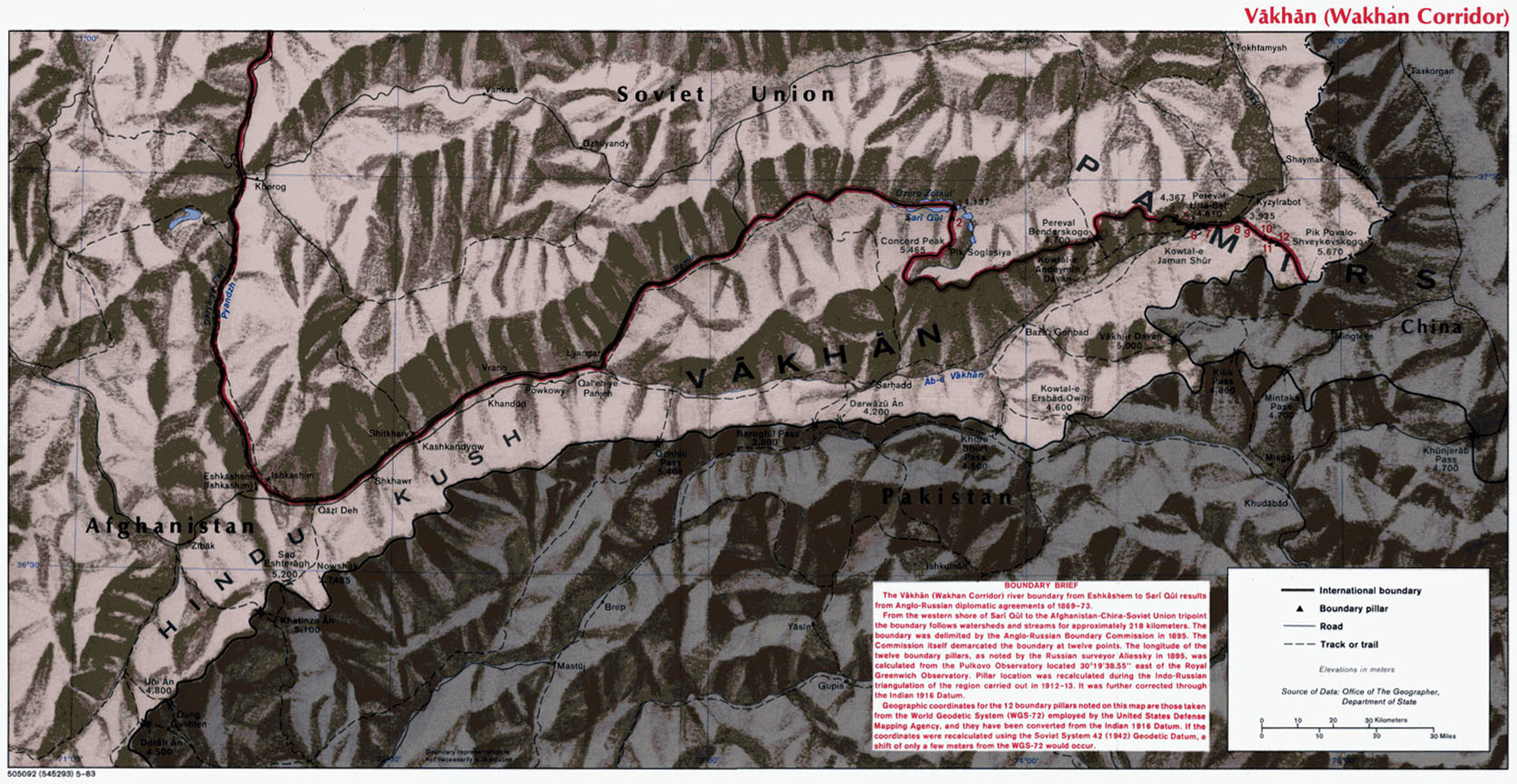
I arrived on January 21st in Kabul. On 23rd morning, thanks to good weather, we (that's Laurent Fleutot and Louis Meunier, more about them later...) were in a hired 4 seater Kodiak (not Zodiak!) plane bound for Kret village, towards the end of the Wakhan Corridor (approx. here, where the "V" of Vakhan is written) - but still a long way to the Little Pamir region, our destination - the abode of the Afghan Kyrgyz. It was my second winter expedition there. To my knowledge no one ever went there twice in winter (I was there in 2008 as well). 7 days and many yaks, camels and horses caravans later, we were in the Little Pamir. We were there to shoot a film. You can see more about this here, on the official website (which is being built, so check again later).

We were on the road, walking, for 23 days, at about 4200m, with temperatures between -10 and -30 C, no showers and only rare smoked in shepherd houses as resting places. Of course it was tough at times, but then again, it was incredibly beautiful.

We came back down from the Little Pamir in a snow storm. After 8 days of constant snow, walking over a a frozen river (the only way down), we were back in Kret village. We called in Kabul with our satellite phone to get back on that Kodiak plane. The sky had magically cleared. We were told it's possible but please, first we needed to clean the snow off the airfield. The village head gathered a few manly souls and off we were at the airfield, shoveling off the snow that would bring us back to civilization...


En FRANCAIS:

Me voila rentré depuis 10 jours d'une expédition hivernale incroyable d'1 mois, dans les Pamirs Afghan! Bien évidemment, c'est une longue histoire - et je tenterais de la raconter plus en détail, via mes images, dans les mois qui viennent. En attendant,  voici une petit résumé…

Arrivé le 21 Janvier à Kaboul. Le 23 au matin, il fait beau et nous (c’est-à-dire Laurent Fleutot  et Louis Meunier – je reparlerais plus tard de mes camarades d’expé…) sommes dans Kodiak, un 4 place en partance pour le village de Kret, vers la fin du corridor du Wakhan (là ou le V de Vakhan est écrit) – mais encore bien loin du Petit Pamir, notre destination. À ma connaissance, aucun étranger n’est jamais allé 2 fois là-haut en hiver. 7 jours et de nombreuses caravanes de yacks, chameaux et chevaux plus tard, nous étions dans le Petit Pamir. Nous étions là pour touner un film. Plus d’info à ce sujet sur ce site, qui est en train d’être construit.

Nous étions en chemin pendant 23 jours de marche,  à 4200m, avec des températures entre -10 et -30, pas de douche et comme seul logis des bergeries enfumées. Cela fut dur par moments, mais tellement beau aussi !

Nous sommes redescendu du Petit Pamir dans une tempête de neige. Suite à 8 jours de neige et de marche sur la rivière gelée, nous étions de retour au village de Kret. On appela Kaboul avec notre téléphone satellite, pour essayer de remonter dans cet avion Kodiak. Le ciel s’était éclairci, comme par magie. Le pilote nous dit alors qu’il viendrait nous chercher, mais d’abord nous devions enlever tout la neige sur la piste d’atterrissage.  Qu’à cela ne tienne. Le chef du village rameuta les troupes : nous enlevions la neige à grands coups de pelles, nous frayant un chemin de retour vers la « civilisation ».

Friday, January 21, 2011

Back to the Afghan Pamir, dropping out for 1 month - Retour au Pamir Afghan, coupé du monde pendant 1 mois.

 Our world is over-connected, it's a bless and a curse. It's hard to find places without electricity or mobile reception. Without these 2 things, you are pretty much left alone. I am off today to one of this remaining "unconnected" place. My second winter expedition to the Afghan Wakhan - you can see the story I shot there in 2008 on my website ("Forgotten on the roof of the world"). I first trekked to this place over 10 years ago while living in Pakistan.

I spent the whole last 2 weeks preparing the trip, mainly stocking up again on warm gear. I am embarking on a film project, where I will be filming as well as photographing. A story that has been in the pipeline for a while.

I shall be in Kabul tomorrow, meeting up with the 3 other team member (two french: the director and other cameraman and an Afghani sound engineer). Then we will hop in a little chartered Zodiak plane - much like this one below, expect our pilot will look different - with 250 Kg of gear and fly near Sarhad, at the end of the Wakhan corridor.


Then we will trek for few days on the frozen Wakhan river (Pakistan to the south, Tajikistan to the North, China to the east), a caravan of probably 7 or 8 yaks - we will have over 600Kg of gear all inclusive - and hopefully reach the high altitude plateau of the Little Pamir, at 4300m,  4 or 5 days later. Then we will set up camp and start work on our project, focusing on the Afghan Kyrgyz. More about this later. Outside our tent it will be incredibly cold but it seems worth it - that's how it will look on an overcast day:


Of course, this plan is to be taken with a heavy dose of "inch'allah" - too many factors can alter it. But that's the beauty about it: being surprised. And certainly feeling incredibly lucky this is even happening at all!

Over to you, I am off and out, back in 1 month...


Monday, January 10, 2011

Nepal, Annapurna trek, Geo publication, "Die Strasse", the road...

Last July I went for 10 days to walk some of the Annapurna trek for Geo magazine, as part of a special issue on the Himalayas. It's one of the legendary trek of the Himalayan world. I had done part of it over 10 years ago but since then, a jeep road has been built in the western side of the circuit, reaching to the holy shrine of Muktinath - mostly bringing Indians believers, who flew into Jomson village, then took the jeep to the base of the shrine, then horses to the shrine itself... minimal walking involved (question: does that defy the idea of a "pilgrimage"?). They are building a similar road on the eastern side of the Annapurna circuit.
I went with writer Tom Dauer, who when not on assignment, lives in a beautiful farm house at the feet of the Alps, 40Km south of Munich - great place to read, write and chop wood!
Here we are, after a quick dip in the holy spring of Muktinath (which washes from all sins! thanks goodness...) this ended up at the beginning of the magazine, an interesting contributor picture.

Voici quelques images ainsi que l'article publié dans Géo allemagne, suite à mon reportage sur la route qui se construit le long du célèbre trek autour des Annapurnas. Ci-dessous, me voila avec Tom Dauer, l'auteur de l'article... Ici aussi, un diaporama fait par Geo.


Geo did a small sideshow piece, and ask me to lay some words over it. Here it is in English or German, it summarizes the story quite well.

This is the resulting article from that story, came out in December 2010:


And these are some of the images that didn't make it into the story, life along the road...


Friday, December 17, 2010

Legionnaires also sleep - les legionnaires dorment aussi! - Djibouti

Last June, I shot a story on Djibouti for Geo magazine (German edition). On any good story, there should be one aspect of it that surprises you, that touches you. The French foreign legion is very special. Most guys aren't french. Theses days, most of them comes from eastern Europe and South America. We joined them on a FOB exercise (Forward Operating Base) in the desert. It must have been 50 degrees and 80% humidity. Legionnaires apparently are the crème de la crème when it comes to killing machines. But at night they sleep - their guns beside them, ready for action. These images (long exposures) were shot in the middle of the night, under full moon.


En Juin dernier je suis parti photographier Djibouti pour Geo allemagne. Durant tout bon reportage, il doit y avoir un aspect qui vous surprend, qui vous touche plus particulièrement. La légion étrangère est très special. La plupart des légionnaires ne sont pas francais, ils viennent ces jours-ci surtout de l'Europe de l'est et de l'Amerique du sud. Nous avons suivis un excercice de FOB (Forward Operating Base) dans le désert. Il devait faire 50 degrés et 80% d'humidité. Les légionnaires sont apparemment la crème de la crème des machines à tuer. Mais la nuit ils dorment - leurs armes à leur côté, prêt à l'action. Ces images (des expositions longues), ont été prises au milieu de la nuit, sous la pleine lune.

Sunday, November 7, 2010

Geo germany, my feature on Djibouti, East Africa

Last June I spent 3 exciting and burning hot weeks (= 45 degrees and 90% humidity... nice!) in Djibouti, on assignment for Geo Germany.
The article came out this week, I was very happy with the result - the whole assignment made me love my job. I felt really lucky.
In fact, I have always been really fascinated by all the intrigues of the Great Game = the strategic rivalry between Russian and British Empire that took place 100 years ago in Central Asia - basically spies dressing up like locals trying to gather information and risking their lives on the way. And much more. Peter Hopkirk has written a few books on this, and they are so extremely well written and documented, I encourage everyone to read them.
Anyway, as it turned out, shooting a story in Djibouti was like diving into the Great Game, but the African version, and its taking place now...
Djibouti, Dschibuti, Yibuti, Djiboeti... however you call it, is right on the Horn of Africa, opposite Yemen, north of Somalia, east of Ethiopia and South of Eritrea! Strategically and geopolitically, it is of extreme importance. It's an island of relative peace in the middle of a relative big mess. So, as it turns out, these days everybody wants a piece of Djibouti: US, China, lots of Europeans countries, Japanese - they all have an army presence in this dried up place. Title of the story sums it up "Alle Welt will nach Dschibuti" which translates more or less as "Everyone wants a piece of Djibouti".


At work at the US army Camp Lemonier ©Ines Possemeyer


During anti-piracy reconnaissance flight, above the Gulf of Aden. German army detachment.

I went with Geo staff writer Ines Possemeyer, a great and passionate journalist. She had worked for a couple of months ahead to secure us access to the various military bases, anti-piracy planes, the president, the foreign legion, refugee centers etc.
They are a million things to say about Djibouti - this is a bless and a curse when it comes to stories. What was a real challenge for me was to get an opening image for the article - one that would summarize the whole complexity of the geopolitical importance of Djibouti. I knew it would be impossible, unless I would find something like an army guy in a slum hanging out with prostitutes while looking for pirates all the while having a chat with the president and a few Somalian refugees... tough one indeed.

Here is the article. I will post more images on Djibouti in the coming days as well as explanations. There are many outtakes - a full story will end up on my website...


En Francais:
En Juin dernier je suis parti 3 semaines, en reportage pour Géo Allemagne.   L'article vient de sortir, je suis content du résultat. L'expérience m'a fait adoré mon boulot - toujours un bon signe.
J'ai toujours été fasciné par les intrigues du "Grand Jeu" - cette rivalité qui a eu lieu il y a + - 100 ans, entre l'Empire Britannique et l'Empire Russe, en Asie Centrale. En gros des espions qui s'habillent en pélerin pour aller récolter des informations dans les contrées reculée de l'empire. Peter Hopkirk a écrit de superbes bouquin a ce sujet, à lire absolument.
En fait, faire ce reportage à Djibouti, c'etait comme rentrer dans le Grand Jeu, version Afrique.
Djibouti, Dschibuti, Yibuti, Djiboeti... peux importe comment vous l'épeler, est sur la Corne d'Afrique (entouré de l'Ethiopie, Somalie et Erithrée, en face du Yemen), c'est stratégiquement et géopolitiquement très important: un lieu assez paisible au milieu d'une zone dangereuse. US, Chine, beaucoup d'Européens, Japonais etc: ils ont tous une présence armée. Le titre du reportage résume bien l'histoire "Alle Welt will nach Dschibuti" : "Tout le monde veut un bout de Djibouti".

Je suis parti avec Ines Possemeyer, journaliste très passionnée, ce fut un vrai plaisir de travaillé avec elle. Elle avait commencé a organiser les accés divers (Armée, président, camp de réfugié etc) quelques mois auparavant - chose essentielle pour ce type de reportage.
Il y a tellement de choses a dire a propos de Djibouti - c'est une bonne et mauvaise chose à la fois. Cela devient sur place très dificile de trouver une image qui symbolise toute la complexité du lieu. Je savais que cela serait difficile, a moins de trouver une mec de l'armée dans un bidonville avec des prostitués tout en cherchant des pirates et en taillant une bavette avec le préseident et quelques réfugiés somalien... bien difficile en effet.

L'article est ci-dessus (ainsi que qq images, en "action"). Je mettrais d'autres images de Djibouti dans les jours qui suivent avec des explications. En fait, le reportage terminera sur mon site dès que je trouverais le temps de le faire.

Thursday, October 28, 2010

Kyrgystan, an adventure in video

Here it is, © Gilemon Villemin (with his and some of my footages), a man of mystery, who joined me on my second trip to Kyrgystan, in June 2008. I went to Kyrgystan, invited to the wedding of an American friend, met in Mongolia, who was marrying a... Kyrgyz beauty. Yes, we live in a little village.

We hitched ride with these 2 after trekking near Lake Song Kol, starting on Kumis (fermented Mare's milk) early morning. Obviously, I wasn't on assignment.


Gilemon called it a video polygraph. Like a lie detector, you might in fact feel the blood pressure, pulse, respiration, breathing rhythms and skin conductivity of the video. Good luck with that...


Kirghiz Polygraph from gilemon villemin on Vimeo.

Thursday, October 21, 2010

Long work days, Paris & Munich, Book reviews and upcoming gigs - bref, un deluge d'infos fracassantes...

Les amis, I have switched the "comment" thing back on I think, je viens de remettre en marche l'option "commentaires" il me semble, please go easy on me...

Last time I wrote it was just over a month ago. It seems like ages. I was in Paris for the book launch of our Mongolia book. Face time, shacking hands, meeting interesting people, even passing on "national" radio (I will put it here when I get the sound bits) - in the middle of the strikes, my preoccupations were indeed futile...

There were recently two nice reviews from our book. Long to translate, I leave them in French. For english readers, just be aware, they are raving reviews and I wish you could speak French! One reviewer talks about his "feeling of euphoria" while looking at the book. And yes, it's only 20 Euros, so you get double euphoria I guess.

I went around a couple of galleries while in Paris (the exhibition in Hong Kong keeps selling, it was and is still a success), and I have a bit more of an idea of what is out there. Couple of leads as well. I will need a second run.

I am in Munich now, catching up. I just filed a story on Tajikistan. I will be going to Hong Kong, to prepare my next exhibition (early next year, in Hong Kong) and for general work, on my way out to Nauru, where I will be shooting a story end of November/December. In fact, I got a good grant from Vannes (Bretagne, France) last March 2010,  to exhibit a story I proposed to shoot, in Nauru. Geo Germany, whom I shared the story with, is coming on board and will publish the story. So now I am not going alone on this god forsaken island... I am going with a writer.

Also: a story I shot in Djibouti for Geo Magazine (Germany) last June will come out end of this month - hopefully it will end up in the international Geo, meaning it's then translated in 18 languages I think, including English. I can't wait to share some images here with you: army, legionnaire, prostitution, president, pirates, refugees etc - this story has a lot to tell. I did a story for them in Nepal in July, it will come out in the next Himalaya special, I think next December. Here a sneak preview from Djibouti, Navy Seals in action.


To finish, a quote that got me thinking a lot, from Bruno Barbey whom I like very much: "I am more attracted by beauty, humanity, positivity... I don't feel right when it comes to sordid.  I refuse the aesthetic of madness and horror."

I am a bit from that school. I guess I also find it hard to "refuse" an aesthetic, it would mean the visual is analysed first intellectualy, right? not only with a visual "gut" feeling? ahhhh... good food for thoughts anyway...

_________________________________

La derniere fois que j'ecrivais sur ce blog, c'etait il y a plus d'un mois. Cela me parait lointain. J'etais alors a Paris pour la sortie de notre liver sur la Mongolie. Serrage de mains, rencontre de gens interessant, je suis meme passé a la radio "national" (je mettrais cet interview ici bientot). Au milieu des grèves et revendications diverse, mes préoccupations étaient bien futiles en effet...

Recemment, 2 critiques sont parues sur notre livre. Les voila ci-dessous, on y parle meme de "sentiment d'euphorie", dingue ça.

Paru dans "Le Monde de la Photo":
"Superbe carnet de voyage en Mongolie
Les Éditions De La Martinière enrichissent leur collection Carnets d’ici et d’ailleurs, avec ce nouvel opus consacré à la Mongolie. Il est l’oeuvre d’un couple intimement lié à l’Asie. Envie de partir loin ? De gagner des contrées sauvages ? Lisez Mongolie, la route de l’horizon. Ou plutôt, laissez-vous porter par ce récit en images. Ni guide, ni documentaire, ce livre de petit format (21 x 15 cm) relate l’expérience d’un couple dans ce pays : Matthieu Paley, photographe, et sa femme Mareille, auteure et directrice artistique.
Douze ans
De nombreux allers et retours ont été nécessaires entre 1998 et 2010 pour achever le travail. Pas un problème pour les deux aventuriers installés à Hong Kong depuis huit ans. Ils nous font découvrir les conditions de vie si particulières des peuples nomades dans le désert de
Gobi, les immenses steppes vertes ou les décors enneigés du canyon de Yol. Les photos sont magnifiques. L’enchaînement de portraits et de paysage fonctionne parfaitement grâce à un sens aigu de la composition. Pas de noir et blanc. Le photographe ne recherche pas seulement les belles lumières. Il joue aussi avec les teintes grisâtres, qui semblent parfois faire fusionner
ciel et terre. Chacun des quatre chapitres (Entre ciel et Terre - La légèreté de l’être - La vie en jeu - La Mongolie est un espace) s’ouvre sur un proverbe mongole, suivi d’un texte signé Mareile Paley.
Rédigé à la première personne, le récit, sorte de carnet de voyage, se veut concis. Si quelques anecdotes sont narrées, il laisse la part belle à l’imaginaire, donc aux images. On pense au travail de Daniel et Olivier Föllmi. L’oeuvre des Paley dégage la même pureté, la même sérénité. Ce livre procure un sentiment d’euphorie, un véritable désir d’évasion. Une superbe invitation au voyage, à un tarif très abordable."

Paru dans Trek Magazine, October 2010:
"On aime ce que fait Matthieu Paley, qu'il photographie les vallées Ismaéliennes du nord Pakistan, la Sibérie ou la Mongolie, comme ici On aime la douceur de ses flous, les veloutés Kodachrome de ses tonalités, la nudité crue de ses cadrages On connaît moins sa femme Mareile, auteure des textes qui rythment et instillent une ambiance, un esprit, au fil des pages L'ensemble est à l'image du pays, étrangement vide, immense et dénudé, épure Un simple retour a l'essentiel."

J'ai rencontré quelques galeries lors de mon passage a Paris - l'expo a Hong Kong continue a vendre, c'etait et cela reste un succés -j'ai maintenant une idée un peu plus précise de ce marché à Paris. C'est une affaire à suivre.
Je suis maintenant a Munich... heures de rattrapage. Je viens d'envoyer un reportage sur le Tajikistan qui sera publié en Decembre. Je serais a Hong Kong le mois prochain - pour préparer ma prochaine expo avec ma gallerie et en chemin vers Nauru, mon prochain reportage en Nov/Decembre. J'ai en effet remporté la bourse Pro du "Festival photo de Mer", pour exposé a Vannes l'année prochaine - il ne me resteplus qu'a faire le reportage!... Apres avoir partagé le synopsis du reportage avec Geo allemagne, il m'ont suivit dans l'idée, je fais donc ca en collaboration avec eux et j'irais donc a Nauru avec quelqu'un qui sait écrire. C'est bon ca...

De plus: le reportage que j'ai fait a Djibouti en Juin dernier sort dans Geo allemagne ce mois-ci. Il devrait paraitre dans Geo International, donc traduit dans + - 18 langues. J'ai hate de partager ces images avec vous: armée, legionnaire, prostituées, président, pirates, refugiés etc - ce reportage a beaucoup a dire. J'ai également fait un reportage pour eux au Nepal en Juillet dernier - il paraitra dans leur "Himalaya Special" en Decembre je crois. Une image de Djibouti rien que pour vous... Les Navy Seal au boulot.


Quelques mots de Bruno Barbey pour finir, photographe dont j'admire le travail "Je suis plus attiré par la beauté, l'humain, le positif. Je ne me plais pas dans le sordide. Je refuse l'esthétisme de la folie et de l'horreur". Je suis un peu de cette école-la. Mais je trouve ca aussi un peu difficile de "refuser" un ethétisme. Cela voudrait dire qu'on juge une image d'abord d'un point de vue intellectuel? pas seulement d'abord avec les trippes? Voila matière à réfléchir...

Thursday, May 6, 2010

Mongolia revisited, Royal Geographical Society, Ulysses, monsters and wonder-woman

Over the last 5 days, I prepared over 130 images for print in my upcoming book on Mongolia, which will come out at the Editions de la Martinière in France, at the end of September. The color proofs are done in France but the actual book print will be done here in Hong Kong, allowing us to supervise it, which is a treat..
I have attached a few new image scans from Mongolia, including (last image) a picture of a TV screen of a movie that played in a yurt once.


After some YouTube research, I am sure it was Ulysses, from 1954, by italian movie director Mario Camerini. Just the stuff of dream I think. I had to put the link too. In the same lineage, Sindbad The Sailor from 1958, is just fantastic. The beginning of animation, and I think incredibly haunting. I am a big fan!


 Text and design of the Mongolia book is by Mareile, my wife, who is a multi-talented wonder-woman, mother, company owner, financial adviser, web designer and... passionate Pilates instructor! As some of you might know, she will be hosting a retreat in Bali from June 19th until June 26th. Have a look here.
I won't be able to join her as I will be hosting a lecture/movie screening of our Pamir movie at the Royal Geographical Society in Hong Kong around this time. Details will soon come on the venue and exact date.

Follow this link for an intrepid travel with Sindbad and the fast moving island monsters.